
What Keeps Your Brain Active at Night?

Updated: Mar 28
Ever wonder why your thoughts go wild at night, that you can’t sleep because your brain wouldn't stop thinking.
If your brain won’t stop thinking at night, it’s usually because your nervous system finally feels safe enough to process thoughts it suppressed all day.
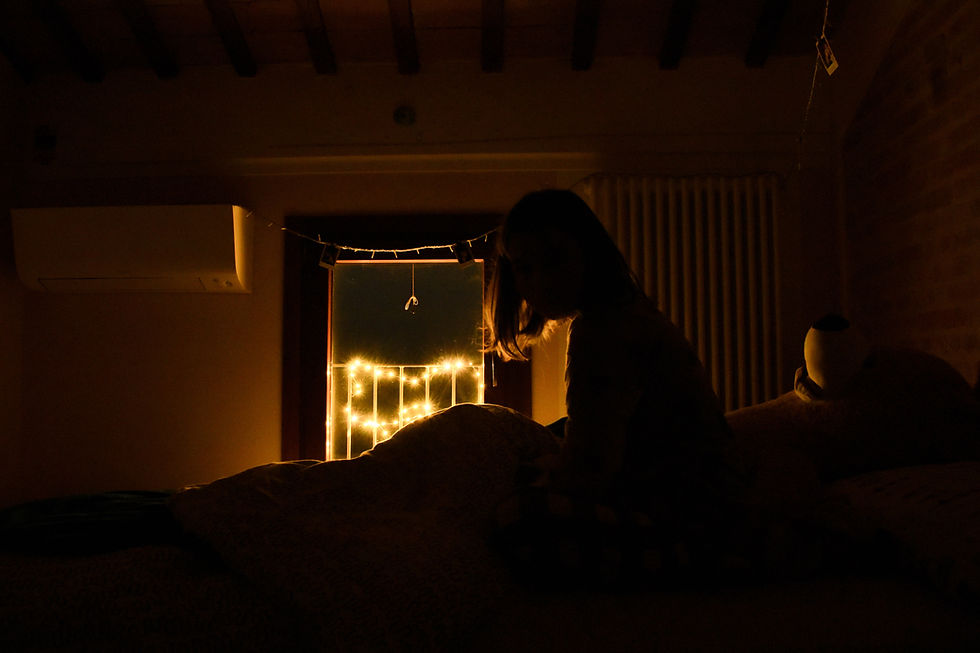
It happens to all of us. Your Brain Is Just Catching Up
Many people notice racing thoughts only when they lie down. During the day, your attention is occupied by tasks, conversations, notifications, and responsibilities. At night, stimulation drops — and your mind finally gets space to process unresolved emotions.
Think of it like unopened emails flooding your inbox once Wi-Fi reconnects.
What’s Actually Happening Neurologically
At night:
cortisol decreases
external stimulation drops
default mode network activates
The default mode network is the brain system responsible for reflection, memory processing, and self-evaluation. It turns on when you’re not focused on a task.
For anxious minds, this system becomes an overactive narrator.
Common Thought Patterns at Night
You might notice:
replaying conversations
imagining worst-case scenarios
sudden motivation to solve life problems at 1:47 AM
remembering something embarrassing from 2012
These aren’t random. They usually cluster around:
unresolved stress
social anxiety
decision fatigue
emotional avoidance during the day
Why Nighttime = Overthinking Peak
During waking hours, your brain prioritizes functioning. At night, it prioritizes processing.
If you didn’t have time (or safety) to process feelings earlier, your brain says:
“Cool. We’ll do it now.”
Signs It’s Anxiety (Not Just “Being a Thinker”)
thoughts feel intrusive or repetitive
you feel physically alert or tense
you want to sleep but can’t
your thoughts feel urgent or catastrophic
Tools That Can Help
1. Scheduled worry time
Set aside 15 minutes earlier in the day to write worries. This trains your brain that processing happens before bed.
2. Cognitive offloading
Keep a notebook near bed. Write thoughts down → tells brain it’s stored safely.
3. Body-based calming
Mental spirals often require physical regulation:
slow breathing
progressive muscle relaxation
weighted blankets
Because anxiety lives in the nervous system, not just thoughts.
Remember, night thoughts are rarely accurate thoughts. They’re tired thoughts.
